Maison de L'oro
Vintage Diamond-Cut Glass Decanter with Stopper – c.1970s
Vintage Diamond-Cut Glass Decanter with Stopper – c.1970s
Couldn't load pickup availability
The 1970s had opinions about glassware, and this decanter is one of the better ones. This is a vintage pressed glass decanter with original stopper from circa 1970, and it has the kind of clean, confident geometry that the decade did very well when it wasn't busy with avocado-coloured appliances.
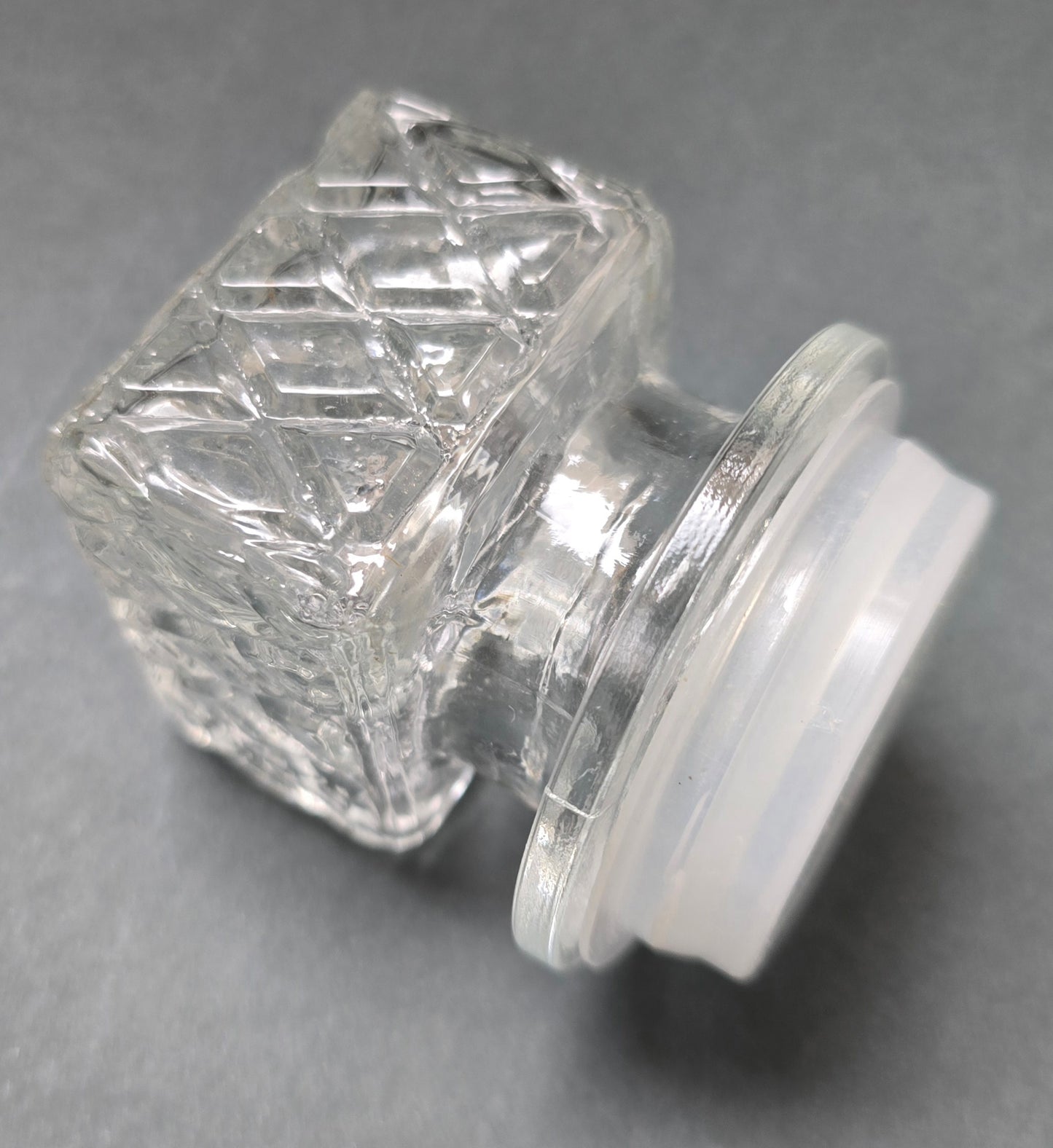
The body is square — properly square, with four flat sides and sharp corners — covered from base to shoulder in an all-over diamond lattice pattern that catches the light and throws it back in a hundred directions at once. The stopper is a squat cylinder with the same diamond pattern pressed into it, sitting on a frosted glass collar that seals the neck neatly. And here's the detail that separates this from a purely decorative piece: there is a plastic sealing ring fitted beneath the stopper, meaning this decanter was designed to actually be used — to hold spirits, wine, or whatever you feel deserves a proper vessel.
The top-down view reveals a perfectly round neck opening set into a square shoulder with a fine beaded border — a small but considered design detail that shows someone was paying attention. The base is flat and stable, with a moulded maker's mark just visible through the glass.
In excellent condition throughout — no chips, no cracks, stopper present and sealing ring intact.
Height: 24 cm
Width: 9.5 cm
Weight: 858 grams
Material: Pressed glass with plastic sealing ring
Style: Vintage / Mid-Century Modern
Year: circa 1970s
Condition: Excellent — no chips or cracks, original stopper and sealing ring present
Fill it with whisky. Fill it with water. Fill it with something amber-coloured and leave it on a sideboard where it will do exactly what it was designed to do: look completely at home and quietly excellent.
WARNING: The square format of this decanter means it will not roll off surfaces if nudged. This is, objectively, an improvement on round decanters and we are surprised it didn't catch on more widely. Maison de L'oro considers this a design triumph. The 1970s, for once, got something exactly right.
Share